
Wayne County Release Date Meanings
Mississippi Department of Corrections uses the exact public label Tentative Release Date. MDOC defines it as an anticipated release after eligible earned-time adjustments and credit for time served. It differs from Maximum Discharge, which is the expected end date without early-release allowances. It also differs from an ERS Date, which marks a possible move to Earned Release Supervision, and from parole eligibility, when the Parole Board may consider conditional release. These dates answer different questions.
A Wayne County jail stay follows another record chain. A person awaiting trial does not have an MDOC sentence calculation merely because a charge exists. Bond, dismissal, a plea, sentencing, time-served credit, or a court release order can change the jail outcome. Even a sentenced county detainee should be checked through the judgment, applicable credit, and the sheriff's actual release entry. Applying an MDOC formula to every county sentence creates a false date.
Actual movement can follow the legal decision. Staff may need to verify another warrant, a detainer, residence, travel, or release documents. A parole grant also does not mean the person walked out that day. Read the label, note when it was retrieved, and then seek operational confirmation from the agency holding the person.
Find a Wayne County Release Date
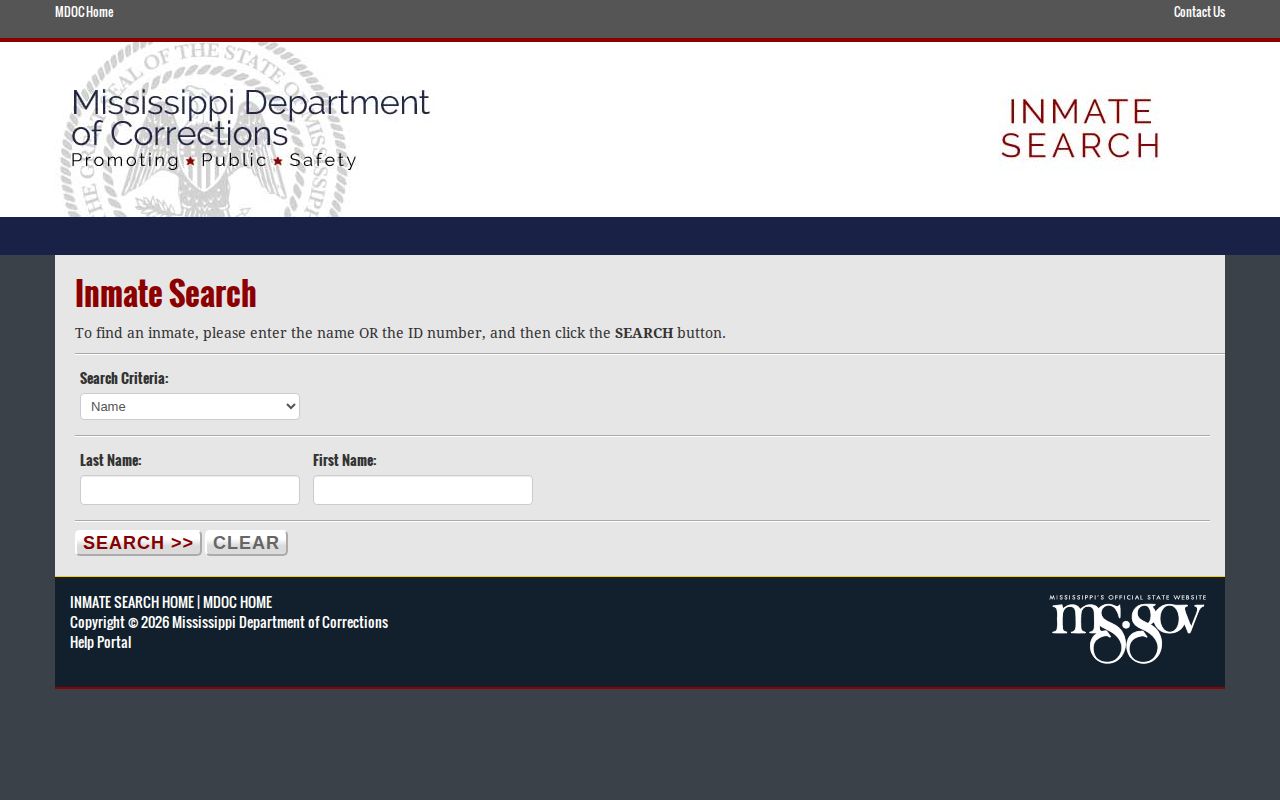
Start with custody type. The MDOC inmate search concerns state correctional custody, not every booking at the Wayne County Adult Detention Center. The public form allows a search by Last Name, First Name, or MDOC ID Number. A person released from the Wayne jail on bond may never appear there. A person transferred from the jail to MDOC may appear while still confined.
- For state custody, search the legal name or MDOC ID Number and confirm the record with the public identifiers shown.
- Open the MDOC detail result and read the exact Tentative Release Date, Entry Date, Location, Unit, and sentence fields.
- Ask the case manager or MDOC Records about operational timing, credit questions, or a stale or blank date.
- For Wayne County jail custody, obtain the judgment or order from the correct court and ask the sheriff for the release calculation or entry.
- Check for a second hold or receiving agency before treating county departure as community release.
- After movement, confirm the completed event with a discharge certificate, movement history, sheriff docket, or release sheet.
The successful manifest capture shows the state-hosted MDOC offender search form used to locate a Mississippi state prisoner.
When the record is county-based, ask which court controls the case. Justice Court may hold initial, warrant, and bond material, while Circuit Court holds felony disposition and sentence records. The sheriff's jail docket shows how physical custody ended. The Wayne County release record search connects those two records without confusing them with MDOC custody.
Wayne County MDOC Date Fields
The public detail layout has verified labels, and they should remain unchanged. A current MDOC example displays identity descriptors, custody placement, sentences, offenses, and the tentative date. It does not show a verified universal Released/Discharged field, separate actual-release date, release reason, or supervising office. The inmate interface is useful for a state sentence estimate, but it is not a full historical discharge database.
| Verified MDOC label | How to read it |
|---|---|
| MDOC ID | The state identifier used to resolve a name match and request records. |
| Entry Date | The date shown for entry into the MDOC record, not a Wayne County booking date. |
| Location | The current MDOC location reported by the interface. |
| Unit | The reported assignment within the corrections system. |
| Location Change Date | When the published location field changed. |
| Number of Sentences | The count displayed for sentence records. |
| Total Length | The total sentence length presented by MDOC. |
| Sentence Date | The date connected to the listed sentence. |
| Tentative Release Date | MDOC's anticipated date after eligible earned time and jail credit adjustments. |
The public MDOC detail example in the manifest visibly confirms the tentative-date label.
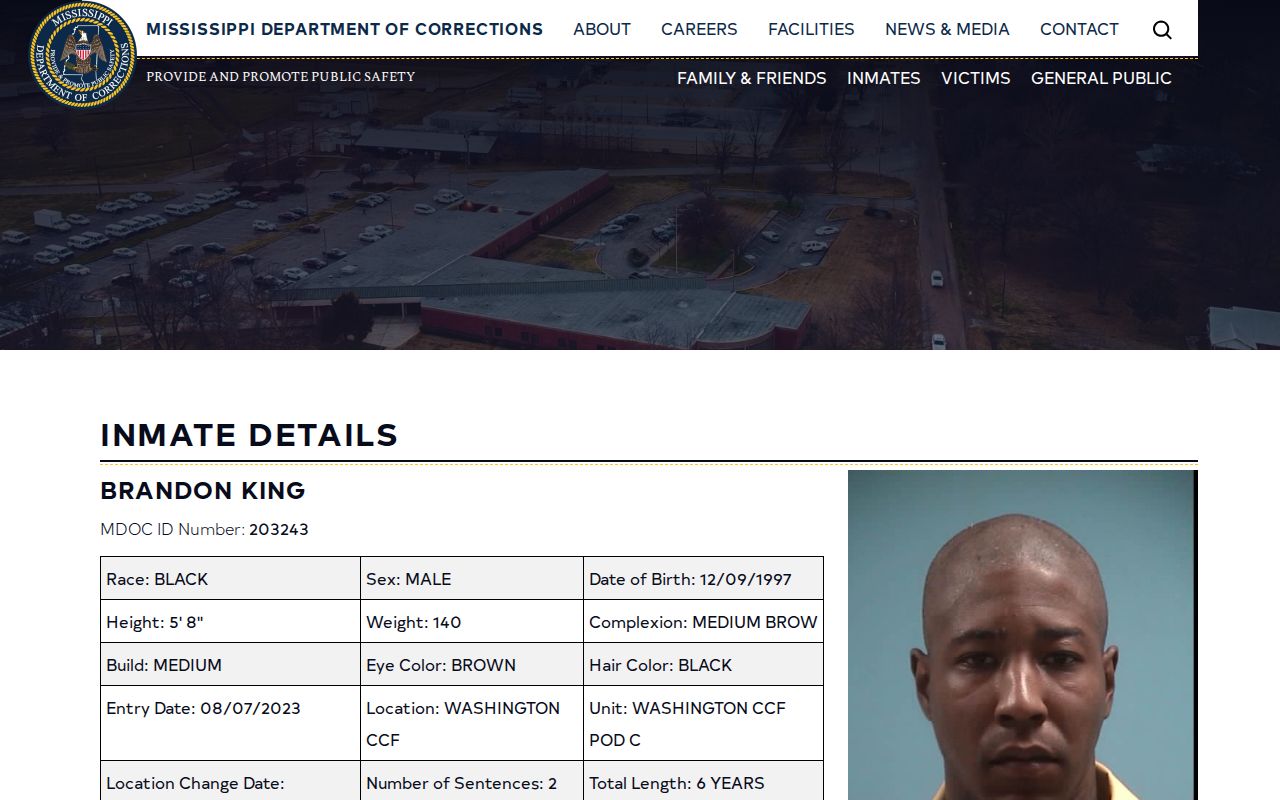
A blank tentative field is not a hidden release code. Some sentence structures, including certain life sentences, may not produce that public estimate. Older print views can shorten the label to Tentative Release. In either case, ask MDOC about the existing calculation instead of inventing a date from sentence length.
Note: Preserve the label and retrieval date because an MDOC tentative release estimate can be recalculated after the public result was saved.
Wayne County Earned Release Calculations
Mississippi's earned-time framework arises chiefly under Miss. Code §§ 47-5-138 through 47-5-140. For eligible sentences covered by the general post-June 30, 1995 rule, § 47-5-138 permits four and one-half days of earned time for each 30 days served and generally limits that allowance to 15 percent. This is the source of the familiar description that an eligible person serves 85 percent in confinement and up to 15 percent on Earned Release Supervision.
That phrase is not a universal calculator. Offense date and type matter. Life, habitual, sex, escape, and specified violent-offense rules can change eligibility, as can jail credit, discipline, later sentences, and other statutes. Some crimes are served day for day. Pretrial jail credit may reduce the state discharge date only when it connects to the proper cause number. Wayne County court and jail records can therefore be needed if MDOC lacks eligible credit from the county of conviction.
- Earned time
- A statutory credit that may reduce confinement for an eligible sentence.
- Earned Release Supervision
- A period outside prison while the person remains under MDOC jurisdiction and retains offender status.
- Maximum Discharge
- The expected sentence endpoint without an early-release allowance.
- Parole eligibility
- The point when the Board may consider release, not a promise that parole will be granted.
- Detainer
- A request or hold from another authority that can prevent a planned release from becoming community movement.
The county route is narrower. Obtain the Wayne County sentencing order, check legally applicable credit, and ask the sheriff for the computation and actual discharge entry. Do not subtract 15 percent from a county jail term by hand. A court order may also include time-served language that must be read in its full case context.
Why Wayne County Release Dates Change
An MDOC estimate is recalculated from legal and administrative facts. A date can move earlier or later without proving an error. The correct response is to identify the changed input and ask the agency that owns it. A Wayne County clerk can provide a filed order, the sheriff can document county jail credit or departure, and MDOC controls its state sentence computation.
| Factor | Possible effect | Best confirmation |
|---|---|---|
| Earned credit | Eligible credit can move an anticipated date earlier. | MDOC time sheet or sentence computation |
| Serious discipline | Forfeited earned time can move the date later. | MDOC calculation and releasable disciplinary record |
| Jail-time credit | Verified credit tied to the cause number can reduce time remaining. | Court order, Wayne County record, and MDOC calculation |
| Concurrent or consecutive terms | Sentence structure changes the combined endpoint. | Judgments and MDOC sentence computation |
| New court order | An amended judgment or revocation can alter the term. | Filed order from the proper clerk |
| Detainer or hold | Planned community release can stop or become transfer. | Holding agency and movement record |
| Parole decision | Eligibility, grant, denial, and actual movement occur at different stages. | Board action sheet, custody record, and parolee search |
| Residence review | An unapproved plan can delay ERS or parole movement. | Case manager or supervision office |
A past tentative date does not prove completed discharge. Check Location, Unit, and Location Change Date, then ask whether a discharge certificate or movement history exists. A future date should be reported only with its exact label and the date it was checked. Never create a replacement estimate by simple subtraction.
Wayne County Tentative Date Quirks
Mississippi separately computes tentative release, ERS, parole, and maximum dates. Credit, earned time, behavior, sentence structure, a hold, and the law tied to an offense date can change the operational outcome. The public Tentative Release Date is therefore not a release appointment. This distinction is especially important for a Wayne County family making travel plans or trying to understand an old date that remains on a captured result.
MDOC says the case manager communicates the operational release date and verifies travel plans. State-prison release processing can take 30 to 45 days, and the person must receive a discharge certificate. MDOC may buy an in-state bus ticket to the selected destination or nearest city, but not an out-of-state ticket. These are MDOC state-prison procedures. They are not promises about release from the Wayne County Adult Detention Center.
The MDOC family and friends release guidance is the manifest source for case-manager, ERS, detainer, and confirmation details.

Note: A Wayne County pickup plan should rely on confirmed case-manager or jail information, not solely on a tentative date displayed online.
Wayne County Parole and ERS Dates
Parole and ERS both can place a person outside prison, but they arise from different authority. The Mississippi State Parole Board decides parole. Eligibility under Miss. Code § 47-7-3 only opens consideration and does not establish a grant. Even after a grant, residence review, holds, documents, or other requirements can delay physical movement. The Board action sheet proves the decision, while the later custody record and parolee result support the movement into community supervision.
ERS is based on earned-time rules and remains within MDOC jurisdiction. Near the ERS date, the person provides an in-state residence for investigation by a community corrections agent. An ERS date by itself does not prove that the plan passed or that the person left prison. The MDOC Types of Supervision material distinguishes ERS from parole and explains the eligible 85/15 framework.
After a parole release, use the separate MDOC parolee search. Its result may show name, MDOC ID, county, supervising officer, photograph, and the exact label Flat Time Date. Do not rename Flat Time Date as release date. A Wayne County match can point toward local supervision, but it does not prove a release from the county jail because the underlying prison can be elsewhere.
Confirm Wayne County Release Timing
For a state prisoner, contact the case manager or MDOC Records when the tentative field is unclear, blank, past, or changed. MDOC public-records requests must be written and are routed through its online portal. Name the existing document needed, such as the time sheet, sentence computation, movement history, or discharge certificate. Include the person's name, MDOC number, date range, and facility if known. MDOC does not create a custom calculation for a request.
For county custody, ask the Wayne County clerk for the judgment, bond order, amended order, dismissal, or release order tied to the case. Then ask the Sheriff's Office for the jail-docket entry, release sheet, or transfer receipt. The court record explains legal authority. The jail record shows when and how custody actually ended. If the disposition names MDOC or another agency, county custody ended through transfer rather than return to the community.
A pending custody alert can add timely notice. Register through the Wayne County VINELink Release Check, preserve the event label, and confirm it with the named source. For federal prison custody use BOP, and for immigration detention use ICE. VINE and MDOC are not substitutes for those systems.
When records conflict, write down each retrieval time and field label. A court can authorize release before jail processing ends, MDOC can recalculate a tentative date, and an alert can arrive before a paper response. Different records often capture different steps. Ask each creating office to correct its own field and keep both the original response and any later correction.